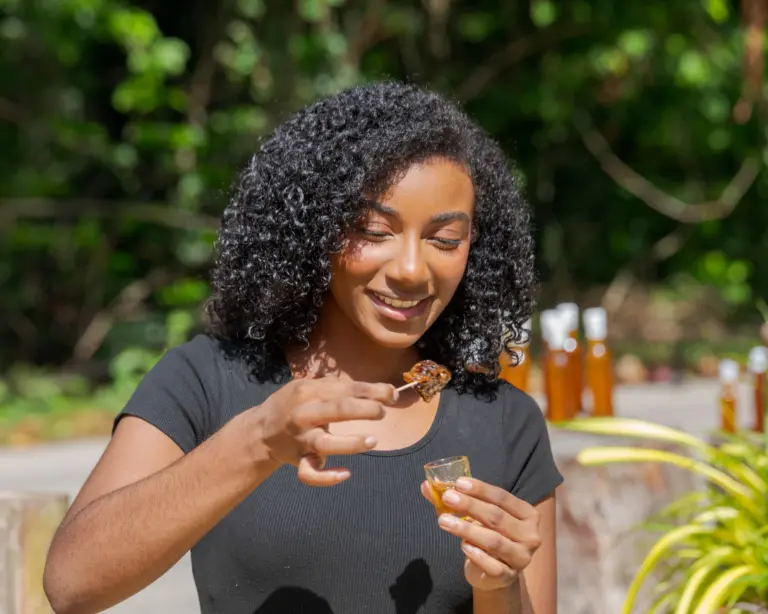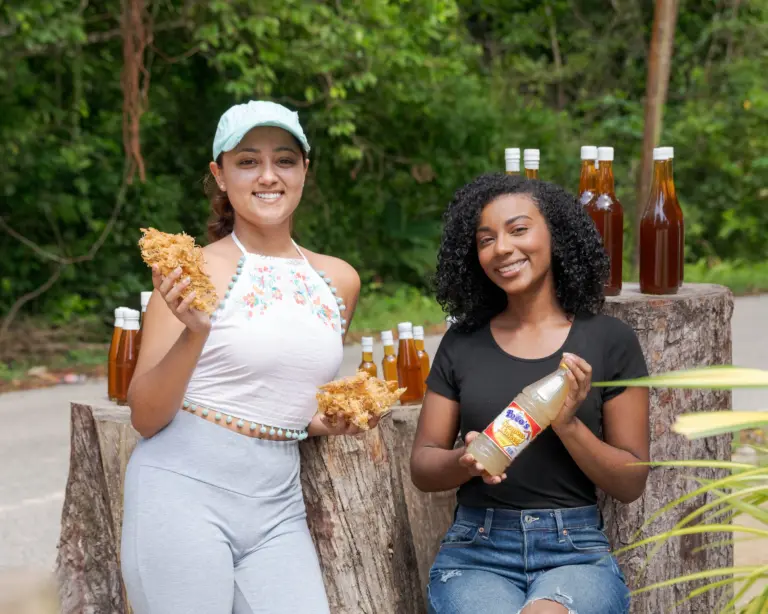
Standing on the rugged coastline of Toco, Trinidad, I spent time with a seamoss farmer whose life is shaped by the rhythm of the Atlantic. He explained that out here, seamoss is more than a product — it’s a tradition rooted in patience, the moon, and respect for the sea. There are no tanks or rushed methods involved. The seamoss is harvested wild, gathered from the rocky shoreline only when it has fully matured, with care taken to leave enough behind so the ocean can naturally replenish itself. He described heading out early in the morning, when the tide is low and the water is clear, and how that quiet hour creates a deep connection between the farmer and the sea.
Back on land, I watched as the process slowed and the attention to detail became even more apparent. The farmer carefully sorted through the seamoss by hand, removing shells, sand, and anything else the sea may have carried in. It was washed several times in clean water, without chemicals or shortcuts, until it was completely clean. He told me that visitors are often surprised by how much effort goes into this stage, but in Toco, quality is non-negotiable. The way the seamoss is cleaned mirrors how the community treats the ocean itself — with gratitude and respect.
The drying stage felt almost meditative. The seamoss was spread out under the open sun, relying solely on natural Caribbean heat and sea breeze. Over the course of several days, I could see it transform in color and texture, shrinking as the moisture evaporated and the minerals remained. The air carried the scent of salt and sunshine, and rows of seamoss drying near the coast became a quiet, beautiful part of the landscape. There was no rushing this step; nature decided when the seamoss was ready.
Before it ever reached a market or visitor’s hands, each batch was inspected one final time. The farmer explained how it is prepared differently depending on its use — sometimes left whole, sometimes cut, or later soaked and blended into gel. What stayed with me most was his belief that selling seamoss is about more than commerce. It’s about sharing a piece of Toco’s coastline, culture, and way of life. Anyone who takes seamoss home from here isn’t just buying a natural product — they’re taking a story shaped by sea, land, and the people who work in harmony with both.