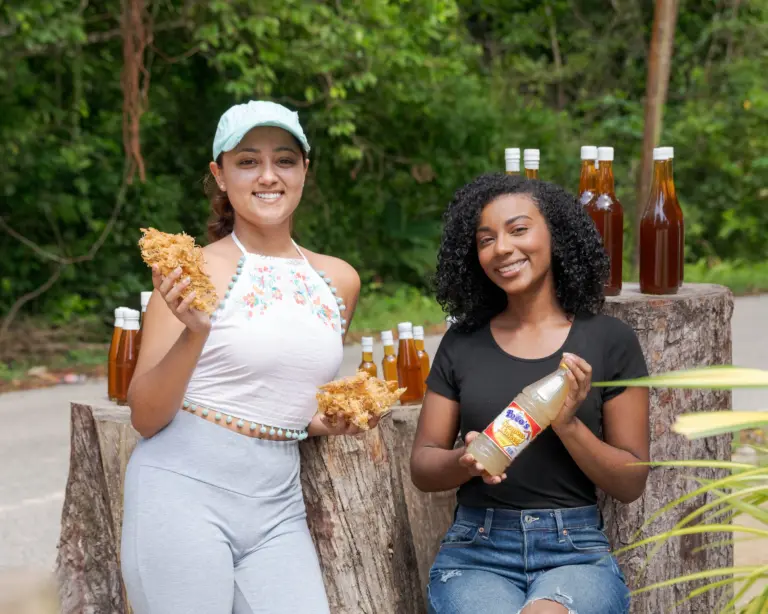
I recently spent time in Toco, Trinidad, learning about honey production through the eyes of a local bee farmer, and it all begins at his apiary, tucked quietly between forest and flowering land. He explained that getting bees isn’t about chasing swarms, but about creating the right environment. Hive boxes are placed carefully so local bees feel safe enough to settle in on their own, or sometimes a small nucleus colony with a queen is introduced. The bees here are well adapted to the climate, and the diversity of wildflowers around Toco gives the honey its distinct character.
Starting the apiary was less about equipment and more about understanding balance. The farmer showed me how each hive is positioned to catch the morning sun and avoid the harshest afternoon heat. Maintaining the apiary means regular observation rather than constant disturbance — checking hive health, watching for pests, and ensuring the queen is thriving. During heavy rains or drier months, extra care is taken to support the bees without over-managing them. The goal, he said, is always to keep the apiary calm and productive, letting nature do most of the work.
Harvest time at the apiary is a careful, almost meditative process. The farmer only removes honey when the bees have sealed the combs, a sign the honey is fully mature. Wearing protective gear, he lifts the frames gently, always leaving enough honey behind so the colony remains strong. Standing nearby, I could smell warm wax and nectar in the air, and it was clear this wasn’t rushed work. Every movement respects the rhythm of the hive.
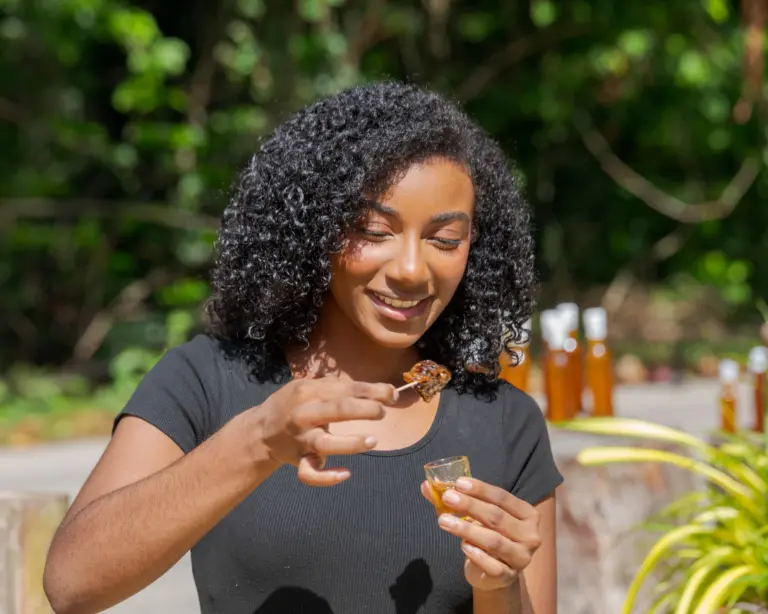
The final stage happens away from the apiary, where the honey is extracted and prepared for sale. The wax caps are removed by hand, and the frames are spun until golden honey flows freely. It’s lightly strained and bottled without heavy processing, preserving the natural flavors drawn from Toco’s landscape. Through this bee farmer’s apiary, honey becomes more than a product — it’s a story of land, bees, and tradition, shared with visitors who want to taste an authentic piece of Trinidad’s northeast coast.